

Learn anything.
Remember everything.
Lokii turns anything you study into a personalized system for remembering it — it understands your material, models how you forget, and builds memory palaces, spaced reviews, and recall challenges around you.

Product preview — illustrative data
Built on evidence-backed learning principles
The Problem
Learning isn't the hardest part. Keeping it is.
In 1885, Hermann Ebbinghaus measured how quickly new material fades without reinforcement. When researchers repeated his experiment 130 years later, the curve looked almost identical. Hours of study can dissolve within days — not because you studied wrong, but because nothing interrupted the forgetting.
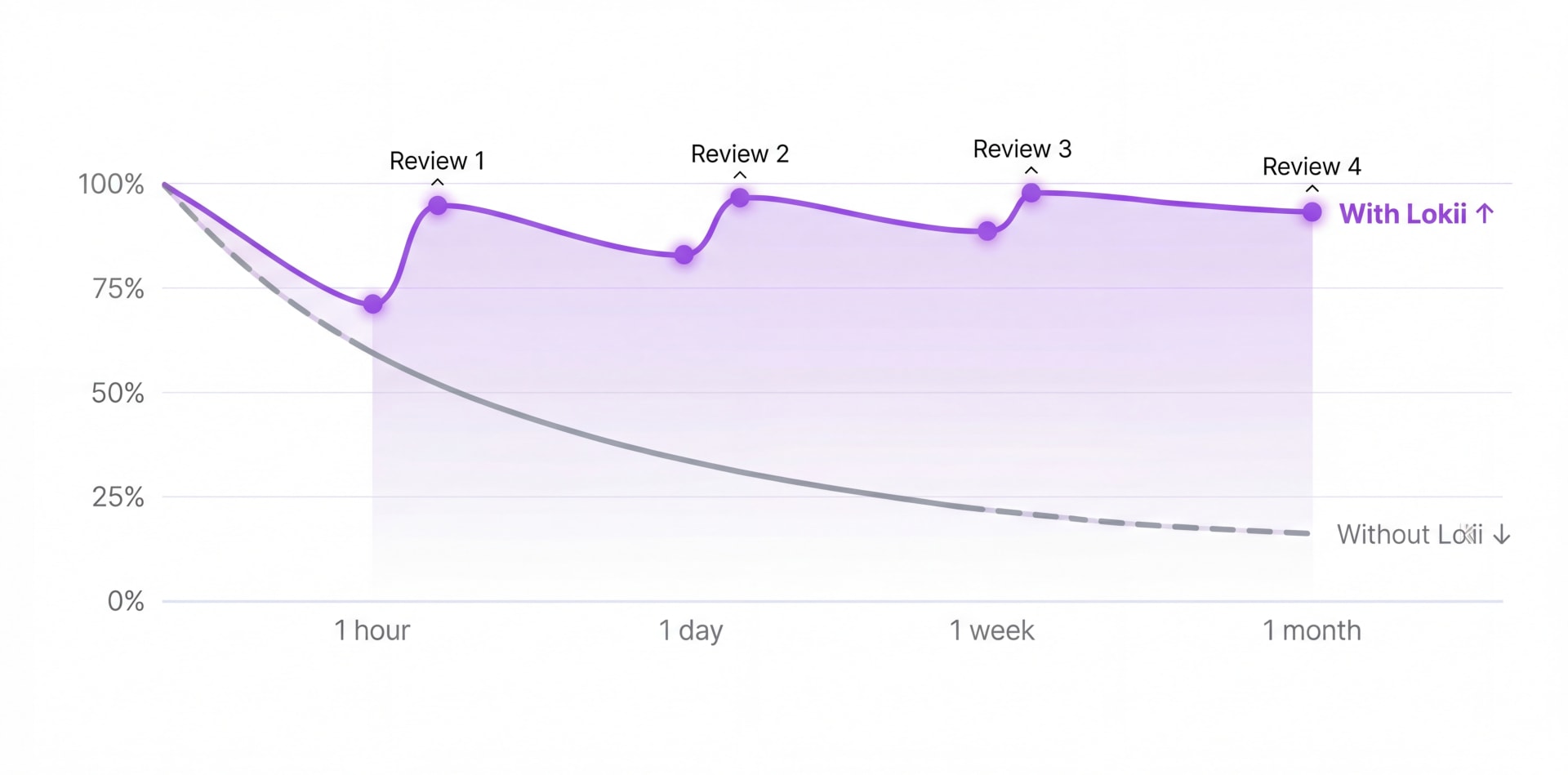
Illustrative curve — the pattern first measured by Ebbinghaus (1885) and replicated by Murre & Dros (2015, PLOS ONE)
1885 — the year science first measured how fast we forget
Replicated 130 years later — Murre & Dros, PLOS ONE (2015)
How It Works
From material to memory — in three steps.
Upload anything you need to learn. Lokii understands it, builds the right memory experience around it, and reinforces it before you forget.
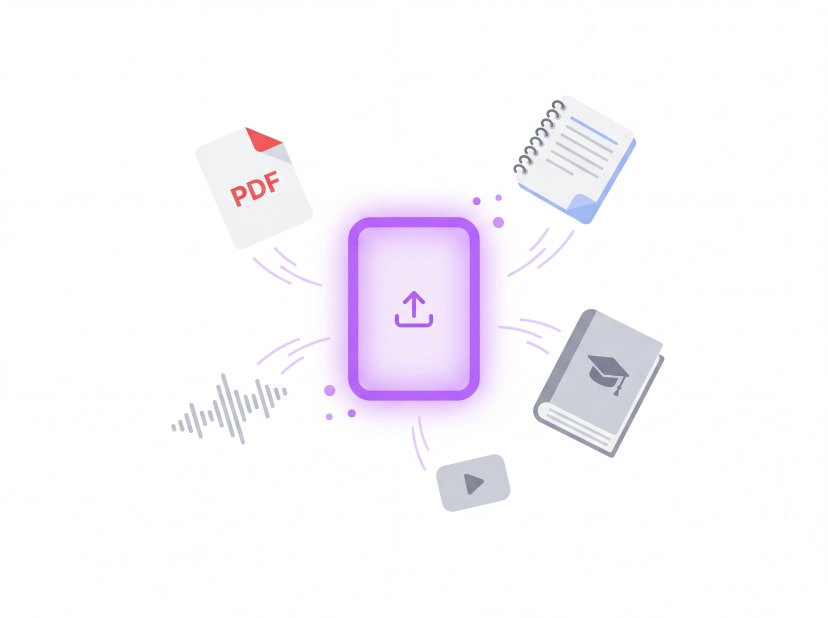
Upload your material
Drop in notes, textbooks, PDFs, lecture recordings — or just type a topic. Any format, any subject, from organic chemistry to contract law to Mandarin vocabulary.
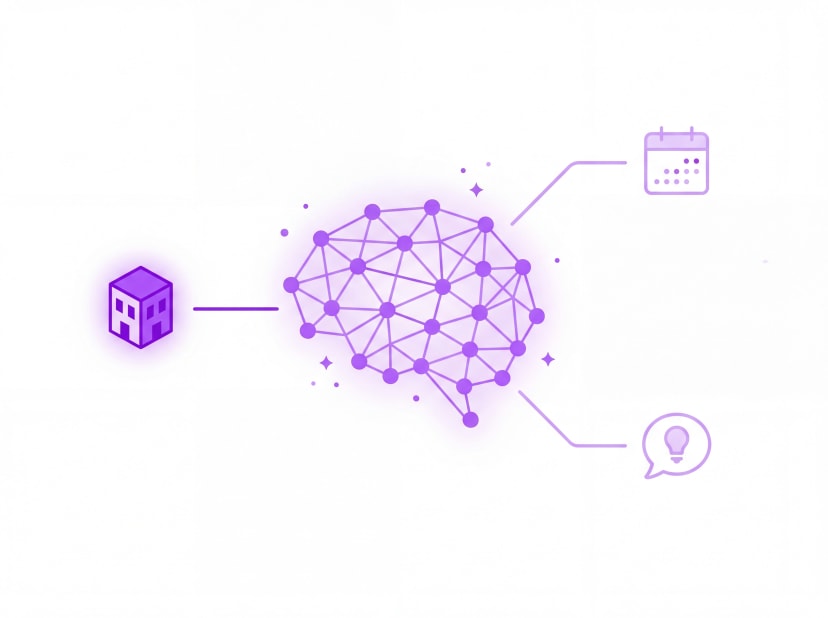
Lokii understands it
Lokii maps the concepts in your material and how they connect, then matches each one to the technique that fits it best — memory palace for spatial detail, spaced recall for facts and vocabulary, teach-back for dense theory.
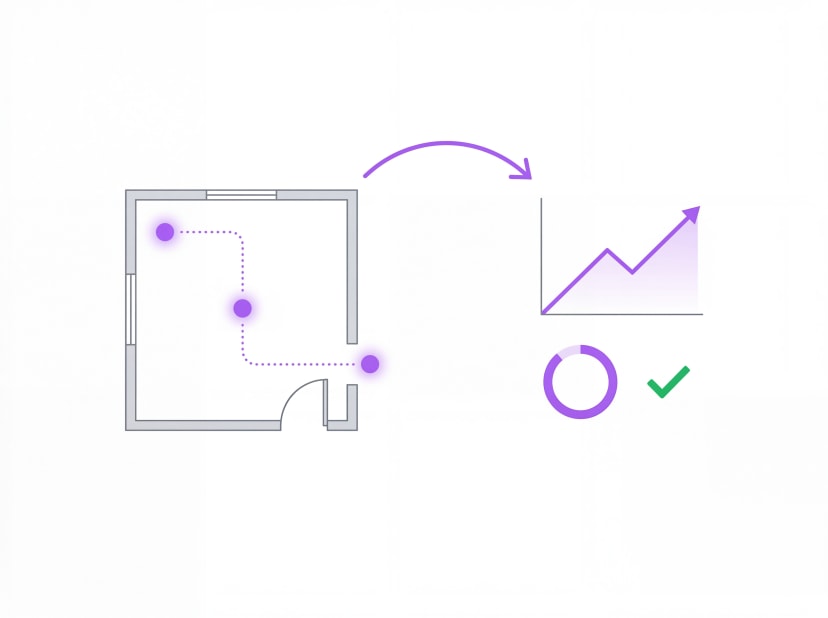
Learn and reinforce
Walk through your memory palace and answer recall challenges. Lokii schedules each review for the moment a memory starts to fade — so every session stays short and lands where it counts.
The Memory Palace
Your knowledge becomes a place you can revisit.
Instead of a deck of cards, Lokii builds you a place. Each concept is anchored to a spot in a vivid, walkable space — because spatial memory is one of the most durable systems your brain has. It's the same strategy 9 of 10 of the world's best memorizers rely on (Maguire et al., Nature Neuroscience, 2003), built for you automatically instead of through years of practice.
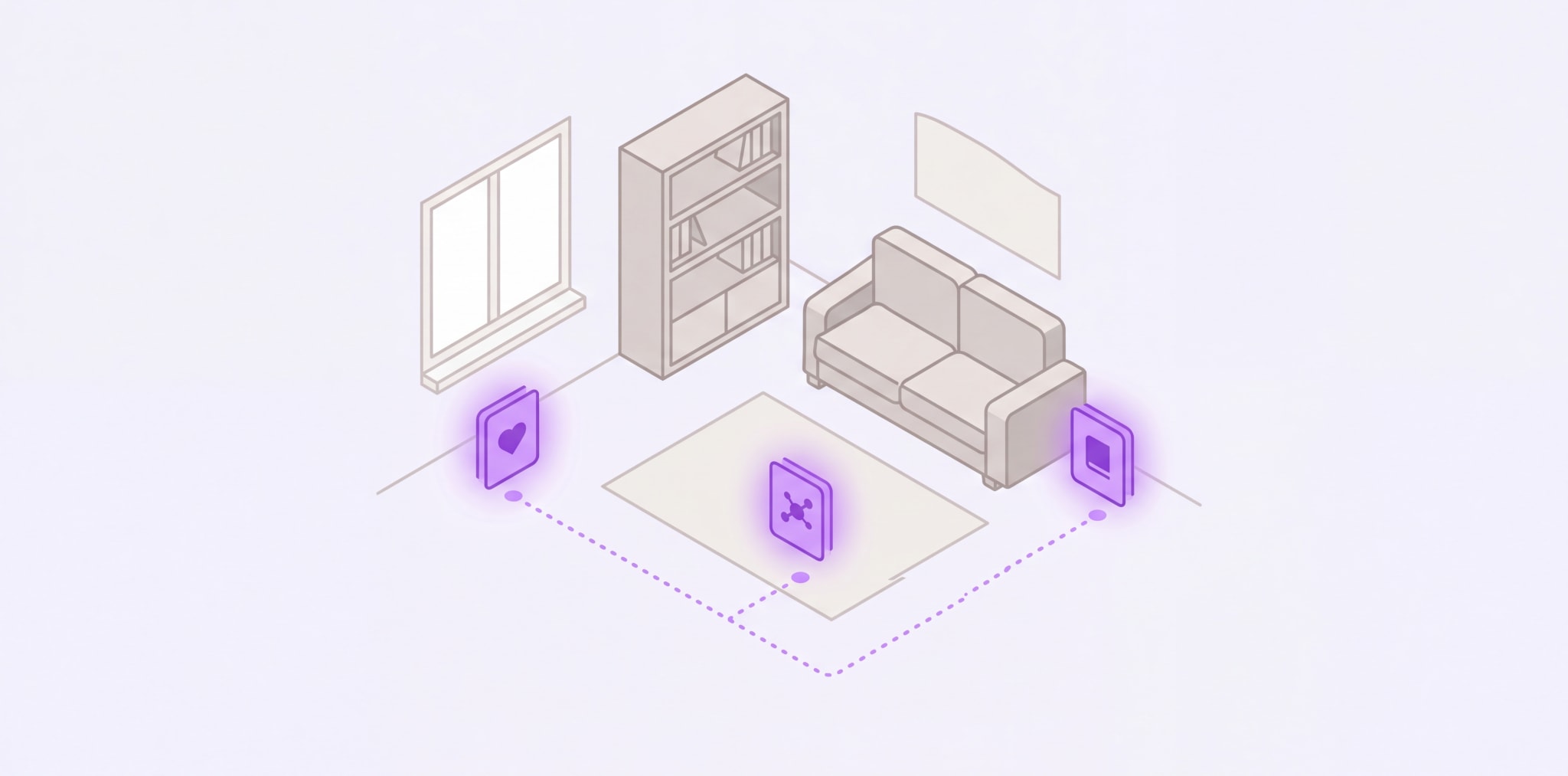
Product preview — illustrative
Memory Intelligence
Lokii learns how you forget.
Under the memory palace sits a personal model of your memory. Lokii tracks every recall — what came easily, what took effort, what slipped — and turns it into decisions about what to reinforce, how, and when.
Maps what you learn
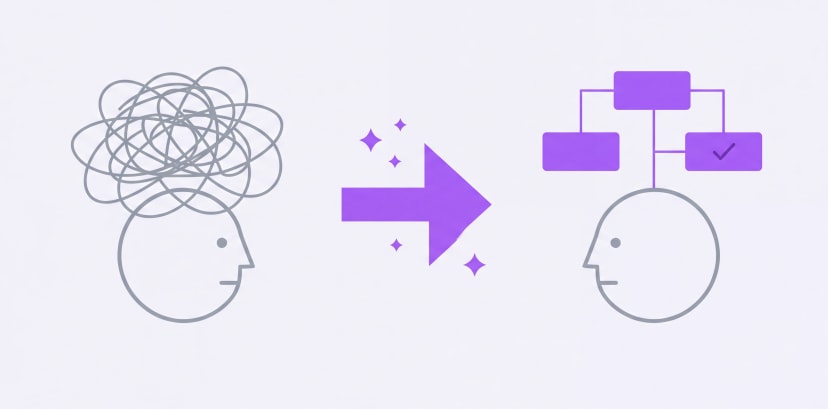
Your material becomes a knowledge graph — concepts, definitions, and the links between them — so Lokii knows what depends on what, and what to strengthen first.
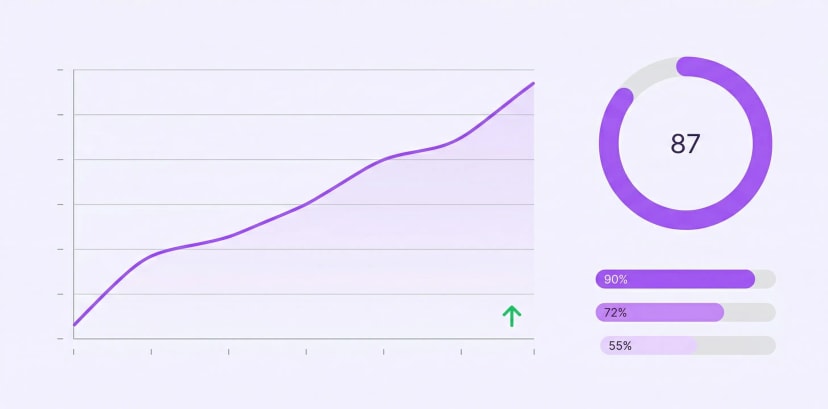
Predicts what you'll forget
Every review updates a per-concept retention estimate. Lokii flags what's fading before it's gone, so your effort goes where it matters — not to what you already know.
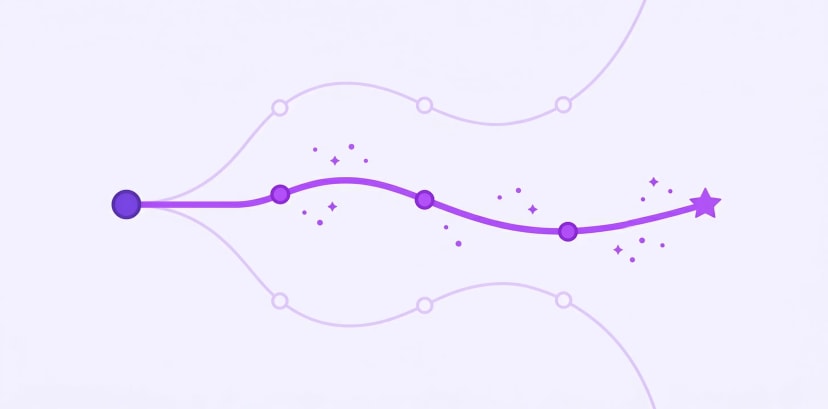
Picks the technique that fits
Spatial detail goes to the memory palace. Facts and vocabulary go to spaced recall. Dense theory gets teach-back. The routing adapts as your results come in.
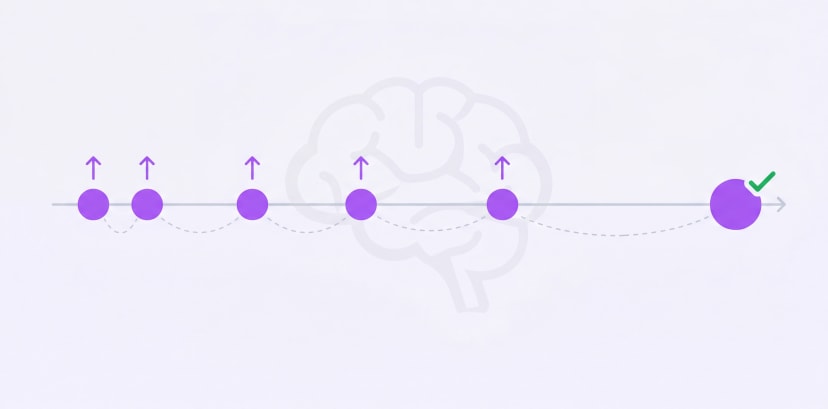
Schedules reinforcement, not repetition
Reviews land just before each predicted dip — the moment when recalling something strengthens it most. A few precise minutes instead of hours of re-reading.
Checks you can teach it back
Explaining a concept in your own words exposes the gaps that recognition hides. Lokii listens for what's missing and fills exactly that.
Why Lokii
Most study tools help you review. Lokii is built around retention.
Flashcard apps hand you the drill and leave the remembering to you. Lokii closes the loop.
Review tools stop at the card
Anki, Quizlet, and notes apps give you one technique, manual setup, and a generic schedule. Nothing models what's actually happening in your memory — so the forgetting curve wins by default.
Lokii closes the retention loop
It understands your material, predicts what you're about to forget, matches each concept to the right technique, and schedules reinforcement before the fade. Every review makes the model of your memory sharper.
Any subject, any level
Medical school, bar exam, language learning, professional certifications, coding, history — if you need to learn and remember it, Lokii handles it.
Real retention, not cramming
Most apps help you pass tomorrow's test. Lokii helps you remember for months and years. The difference between short-term memory and actual knowledge.
Visual & spatial learning
Memory palaces transform abstract information into vivid spatial experiences. Your brain is wired for places and images — Lokii exploits that natural wiring.
Built to follow you everywhere
Lokii is being built web-first — study at your desk, review on your phone. Your palaces, schedule, and retention model stay in sync wherever you open it.
Who It's For
Built first for people who can't afford to forget.
Lokii's private beta starts where retention is non-negotiable — where forgetting costs exams, licenses, and careers.
Medicine
Anatomy, pharmacology, boards. Medical knowledge is vast, spatial, and unforgiving — a natural fit for memory palaces.
University
Exam seasons stack subjects faster than anyone can re-read. Lokii keeps last month's material alive while you learn this month's.
Certifications
Bar, CFA, CPA, licensing exams. Months of preparation, one high-stakes day — retention timed to when it counts.
Professional learning
New domains, new stacks, new regulations. For careers where what you remember is what you're worth.
The Science
Built on evidence-backed principles of memory and learning.
The actual findings behind Lokii's techniques — with sources you can check.
Across 317 experiments, spacing reviews out beat cramming in 259 of 271 head-to-head comparisons.
Cepeda et al. (2006)
Psychological Bulletin — meta-analysis ↗Six weeks of memory-palace training roughly doubled recall in ordinary learners — and the gains held four months later.
Dresler et al. (2017)
Neuron — controlled training study ↗Practicing retrieval roughly doubled what learners remembered a week later, compared with restudying.
Karpicke & Roediger (2008)
Science — retrieval practice study ↗Recall after six weeks of memory-palace training
Dresler et al., Neuron (2017)
Experiments in the definitive meta-analysis of spaced practice
Cepeda et al., Psychological Bulletin (2006)
Years the method of loci has been in documented use
From Simonides of Ceos to modern cognitive labs
Also core to Lokii: retrieval practice, rated top-tier across 10 study techniques (Dunlosky et al., 2013) · the forgetting curve, replicated by Murre & Dros (2015) · the method of loci, validated in a 13-trial meta-analysis (Twomey & Kroneisen, 2021)
FAQ
Questions? We've got answers.
Lokii is an AI retention system. It turns anything you study into a personalized system for remembering it: it understands your material, models how you forget, and builds memory palaces, spaced reviews, and recall challenges around you — so knowledge sticks instead of fading after the exam.
You upload your study material, and Lokii transforms it into a vivid, walkable mental space — like rooms in a building — where each piece of information is placed at a specific location. When you need to recall, you mentally walk through the space. When researchers studied the world's top memorizers, 9 of 10 used exactly this technique (Maguire et al., Nature Neuroscience, 2003) — Lokii builds the palace for you instead of you spending years learning to construct one.
The private beta is built first for people who can't afford to forget: medical students, university students in exam-heavy programs, professionals preparing for certifications (boards, bar exam, CFA, CPA), and anyone whose career depends on retaining large amounts of information.
Anki and Quizlet are review tools: a single technique, decks you build yourself, and a one-size-fits-all schedule. Lokii is built around retention — it maps your material into a knowledge graph, spots what’s slipping, pairs each concept with the technique suited to it, and queues the review before the memory decays. You bring the material; the system does the remembering strategy.
Yes — and we cite it. Spaced repetition: a meta-analysis of 317 experiments found spacing beat cramming in 259 of 271 comparisons (Cepeda et al., 2006). The method of loci: validated in a meta-analysis of 13 randomized trials (Twomey & Kroneisen, 2021), and six weeks of training roughly doubled recall in a controlled study (Dresler et al., Neuron, 2017). Retrieval practice: rated top-tier across 10 study techniques (Dunlosky et al., 2013). The forgetting curve itself was replicated in 2015 (Murre & Dros, PLOS ONE).
During the private beta, Lokii is free for waitlist members — early members keep free Pro access for the length of the beta. Paid plans will be announced at public launch.
Lokii is in private development. We’ll onboard beta users from the waitlist in phases — join now to get access when the first phase opens.
Ready to make what you learn actually stick?
Join the private beta and help shape Lokii from the start. Early members get free Pro access during beta.